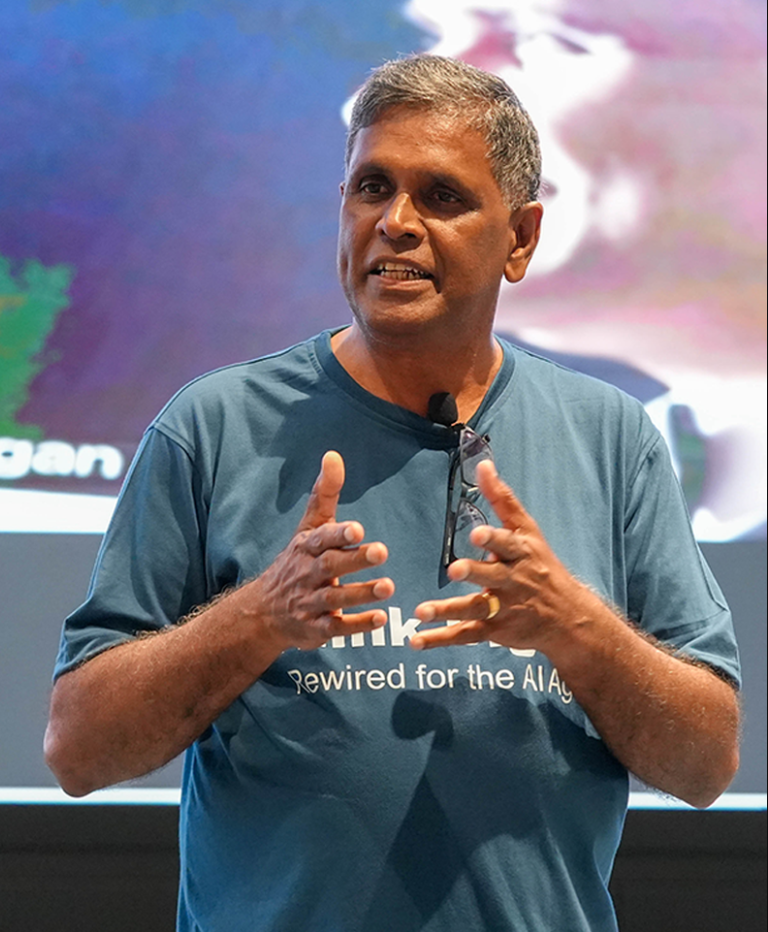
“. Future readiness is about building adaptable human capabilities, not preparing for one particular job. AI should strengthen thinking and learning, not replace them. Parents and...”
We cannot predict exactly what careers or technologies today’s young people will encounter.
Future readiness is about building adaptable human capabilities, not preparing for one particular job.
AI should strengthen thinking and learning, not replace them.
Parents and teachers do not need to be AI experts to provide valuable guidance.
Curiosity, continuous learning, human skills and responsible AI use will remain important even as technology changes.
Key Answer
We cannot predict the future young people will enter, but we can prepare them to navigate it by building curiosity, adaptability, judgement, human skills and the ability to use AI with purpose.
We cannot tell a 12-year-old exactly what work will look like when they are 25.
Some roles will change. New ones will emerge. The tools they use may look very different from the ones we know today.
But that does not mean young people are powerless in the face of change.
We can help them become curious enough to keep learning, adaptable enough to respond to change, confident enough to make their own decisions and thoughtful enough to use powerful technology responsibly.
To me, that is what being future-ready really means.
The Future Is Difficult to Predict, and That Is the Point
Every generation has tried to prepare young people for the world ahead.
The difference today is the speed of change.
Artificial intelligence is already changing how people learn, create, communicate and work. By the time today’s students enter their careers, many existing roles will have evolved, and new types of work will have appeared.
Trying to predict every future job is therefore not the answer.
A better approach is to develop capabilities that remain useful when circumstances change.
Can a young person learn something new? Can they question information rather than simply accept it? Can they communicate clearly? Can they work with others? Can they adapt when their first plan no longer works? Can they use AI without becoming dependent on it?
Those questions matter more than whether we can predict the exact technology they will use ten years from now.
Access to AI Is Not the Same as Being Ready for AI
Young people can now use AI to explain difficult concepts, generate ideas, summarise information, draft content and solve problems in seconds.
That access can be enormously useful.
But being able to use an AI tool does not automatically mean someone knows how to use it well.
A confident-looking answer can still be inaccurate. A fast answer can still prevent deeper learning. A useful tool can become a dependency if a student begins asking AI to do the thinking they need to practise themselves.
That is why AI readiness needs to go beyond prompting.
Young people need to learn how to question an AI response, compare it with other information, recognise uncertainty, protect personal information and decide when AI should, and should not, be used.
The goal should not be to produce students who can get answers from AI.
It should be to develop young people who can decide what to do with those answers.
AI Should Strengthen Thinking, Not Replace It
Before asking AI for an answer, I encourage young people to begin with a simple question: What do I think?
That small pause matters.
It gives them an opportunity to form an idea, attempt the problem or identify what they already understand before asking a tool for help.
AI can then become a useful partner.
It can challenge an idea. It can explain something differently. It can offer another perspective. It can help someone explore a subject more deeply. But the young person should remain involved in the thinking.
A useful habit is:
Think → Ask AI → Compare → Verify → Explain
Think: Form your own initial view.
Ask AI: Use AI to explore or challenge your thinking.
Compare: Look at how its response differs from your own understanding or other information.
Verify: Check important claims using reliable sources.
Explain: Make sure you can explain the final idea in your own words.
If a student can copy an AI-generated answer but cannot explain it, the tool may have completed the task, but the student has not necessarily completed the learning.
Six Capabilities That Help Young People Become Future Ready
Technology will continue to change.
That is why I believe we should focus on capabilities that travel with a young person from one stage of life to another.
1. Stay Curious
Curiosity encourages young people to keep asking questions.
Why does this work?
What happens if I try something different?
Is this information reliable?
What else could be true?
AI can provide information quickly, but curiosity determines whether someone stops at the first answer or keeps exploring.
Curiosity turns technology from an answer machine into a tool for discovery.
2. Keep Learning
Nobody finishes learning at school or university anymore.
The tools, industries and skills around us continue to evolve.
Young people therefore need confidence in their ability to learn something they do not yet know.
That may mean learning a new technology, developing a new skill, changing direction or being willing to become a beginner again.
Knowing how to learn may be one of the most useful capabilities we can give them. Early AI education is a critical step in preparing future innovators.
3. Know Your Strengths
AI can generate text, images, code and ideas.
But being future-ready is not about becoming more like a machine.
It is also about understanding what makes you valuable as a person.
What are you naturally curious about?
What problems do you enjoy solving?
What are you good at?
What do other people rely on you for?
Young people who understand their strengths can make more deliberate choices about how technology supports them rather than allowing technology to define what they do.
4. Build Human Skills
As technology becomes more capable, distinctly human capabilities do not become less important.
They become more visible.
Communication.
Empathy.
Creativity.
Collaboration.
Leadership.
Judgement.
Resilience.
AI may help draft a message, but a person still needs to understand how that message might affect someone else.
AI may generate ideas, but a person still needs to decide which ideas matter.
AI may provide information, but humans remain responsible for how that information is interpreted and used.
These are not merely “soft” skills anymore. They are future-ready skills.
5. Use AI With Purpose
I do not believe young people should be taught to fear AI.
Nor should they be encouraged to use it for everything simply because it is available.
The better question is:
What am I trying to achieve, and will AI genuinely help?
Sometimes the right choice will be to use AI.
Sometimes the better choice will be to struggle with the problem for a little longer, have a conversation with another person, read the original source or work something out independently. Adapting to the AI age requires this balance.
Responsible AI use begins with knowing the difference.
Young people should also understand that using AI does not remove their responsibility for the result.
If they submit it, share it or act on it, they still need to ask whether it is accurate, appropriate and fair.
6. Dream Big. Start Small.
Future readiness can sound like an enormous challenge. It does not have to be. Big futures are usually built through small actions repeated over time.
Read something outside your usual interests.
Learn one new skill.
Ask one better question.
Try something difficult.
Check an AI answer before accepting it.
Speak to someone whose experience is different from yours.
Start a small project.
Reflect on something that did not go to plan.
The future does not arrive in one giant leap. We grow into it one step at a time.
Parents and Teachers Still Matter
One concern I often hear from adults is that young people may understand new technology better than they do.
Sometimes they will.
That does not make the adult irrelevant.
Parents and teachers do not need to know every AI tool or understand every technical development.
Their role is different.
They can ask:
“What do you think?”
“How do you know that is correct?”
“Where did that information come from?”
“What did the AI add to your thinking?”
“Could you explain this without the AI?”
“Do you think using AI is appropriate here?”
These questions teach judgement. And judgement will remain important long after today’s AI tools have been replaced by something new.
Logan's Perspective
After more than four decades working with technology, I have learned that tools change far faster than the qualities that help people adapt to them. When I began my career, today’s smartphones, search engines and generative AI systems belonged to the realm of imagination. There will be more technologies ahead that we cannot yet picture. That is why I do not believe our job is to prepare young people for one fixed version of the future. Our job is to help them develop the confidence and capabilities to meet change without losing their curiosity, judgement, humanity or sense of purpose.
Why I Wrote FUTURE READY™
This thinking is at the heart of FUTURE READY™ – Small Steps. Big Dreams.
I wrote the book because conversations about AI and the future can easily become dominated by fear.
Will AI take people’s jobs? Will students stop thinking? What skills will still matter? Those are important questions. But I wanted to focus on another one: What can we do now?
Future Ready is designed to help students, parents, and educators turn uncertainty into practical action.
Not by trying to predict every change ahead, or pretending technology will solve everything, but by developing the mindset, human skills and responsible AI habits that allow young people to keep moving forward as the world changes around them.
The English edition is available now, with Sinhala and Tamil editions currently in translation.
We Cannot Give Young People a Map of the Future
There is no perfect roadmap we can hand to the next generation. Their world will change in ways we cannot fully anticipate. But perhaps they do not need a map. Perhaps what they need is a compass.
Curiosity to keep exploring. Confidence to keep learning. Judgement to question what they see. Human skills to work with others. Responsibility in how they use powerful tools. And the courage to dream bigger while taking the next small step.
We cannot predict their future. But we can help prepare the person who will enter it.
Continue the Future Ready Journey
These ideas are explored further in FUTURE READY™ Small Steps. Big Dreams., a practical guide for students, parents and educators preparing for an AI-shaped future.
Explore Future Ready and discover practical ways to help young people stay curious, think independently, build human skills and use AI with purpose.
Frequently Asked Questions
What does it mean for a young person to be future ready?
Being future ready means developing the mindset and capabilities to adapt as technology, education and work change. These include curiosity, continuous learning, human skills, critical judgement and responsible AI use.
What skills will young people need in an AI-driven future?
No single list of technical skills will remain current forever. Young people will benefit from adaptable capabilities such as critical thinking, communication, creativity, collaboration, judgement, learning agility and AI literacy.
Should students use AI for learning?
AI can support learning when it helps students explore, question and understand. It becomes less useful educationally when it replaces the thinking or practice the student needs to develop.
Do parents and teachers need to become AI experts?
No. Adults can provide valuable guidance by encouraging young people to question information, verify important claims, protect personal information and explain their own thinking.
How can students use AI without becoming dependent on it?
A simple approach is Think → Ask AI → Compare → Verify → Explain. Students begin with their own thinking, use AI to explore, compare its response, verify important information and then explain the conclusion themselves.
What is FUTURE READY™ — Small Steps. Big Dreams.?
FUTURE READY™ is Logan Nathan’s book for students, parents and educators about building the mindset, human capabilities and responsible AI habits needed to navigate a changing world.
With over 40 years of international experience across computing, telecommunications, digital strategy, and AI enablement, Logan Nathan mentors students and advises institutions worldwide on thriving in the intelligence era.