Big Dreams Start Small: 10 AI Prompts to Help Young People Become Future Ready
“. Generative AI encourages curiosity by generating thought-provoking questions. Using AI to explain topics reinforces understanding and retention. Key Answer Discover how ‘Big...”
AI can help identify strengths by analysing personal data and experiences.
Generative AI encourages curiosity by generating thought-provoking questions.
Using AI to explain topics reinforces understanding and retention.
Key Answer
Discover how ‘Big Dreams Start Small: 10 AI Prompts to Help Young People Become Future Ready’ equips young minds to harness AI for personal growth. Explore practical prompts for learning, curiosity, and creativity.
In today’s rapidly evolving world, the mantra ‘Big Dreams Start Small: 10 AI Prompts to Help Young People Become Future Ready’ isn’t just a catchy phrase; it’s a crucial guide for empowering youth. As an expert in fostering AI literacy, I understand that small, deliberate steps can lead to significant growth. This article provides actionable AI prompts that serve as stepping stones for young individuals to navigate the complexities of the AI era confidently.
Discovering Strengths Through AI
The first step in the journey of becoming future-ready is recognising one’s strengths. AI can be a powerful ally in this process. Using AI tools to analyse personal interests and past experiences can help young people identify three key strengths. Once identified, I recommend choosing one to focus on and refine this week. This exercise not only boosts confidence but also sets a clear path for skill development.
Why it works: AI’s ability to sift through data allows for a nuanced understanding of individual strengths, often revealing hidden talents.
Pro Tip: Encourage students to use AI-powered personality assessments or career exploration tools to gain insights into their unique capabilities.
Curiosity-Driven Inquiry
Curiosity is the foundation of learning, and AI can help cultivate it by prompting thoughtful questions. I suggest using generative AI to brainstorm five intriguing questions about a particular topic and then guiding a simple investigation with a parent or teacher. This approach not only deepens understanding but also nurtures a lifelong love of learning.
Why it works: Curiosity-driven inquiry encourages active learning and critical thinking, essential skills in an AI-driven future.
Pro Tip: Use AI tools to explore topics beyond the usual curriculum, sparking interest in new areas.
Personal Perspective
as an AI Literacy Advocate
Incorporating AI into everyday learning and problem-solving provides young people with the necessary tools to thrive in a rapidly changing world. By starting small, they can build a strong foundation for future success.
Explaining to Learn
One of the most effective ways to solidify understanding is to explain concepts in your own words. Encourage students to use AI to understand a topic and then articulate their understanding verbally or in writing. Providing hints before revealing full answers ensures they engage deeply with the material, promoting retention and comprehension.
Why it works: This method leverages the cognitive benefits of teaching, strengthening neural pathways associated with the topic.
Pro Tip: Pair students for peer-teaching exercises where they explain topics to each other using AI as a reference.
Building Resilience with AI
Resilience is key to adapting to setbacks, and AI can assist in this learning process. I encourage young people to reflect on a recent setback and use AI to identify learning points. Setting a small step to try again fosters a growth mindset.
Why it works: Reflecting on failures with the help of AI fosters a constructive approach to challenges, building emotional intelligence.
Pro Tip: Create a digital journal using AI to track setbacks and progress, turning failures into learning opportunities.
Turning Dreams into Practical Goals
Transforming dreams into actionable steps is pivotal for future readiness. AI can help young people set realistic monthly goals related to their dreams and suggest actionable steps to take today.
Why it works: Breaking down dreams into manageable tasks makes them achievable, fostering motivation and persistence.
Pro Tip: Use AI-driven project management tools to visualise and track progress on long-term goals.
Establishing Small Habits
Habits form the foundation of personal development. I suggest using AI to design a ten-minute daily routine that enhances a specific skill. Tracking progress and resetting after missed days encourages consistency.
Why it works: Small, consistent actions accumulate over time to produce significant improvements.
Pro Tip: Leverage AI apps that provide reminders and analytics to maintain and adjust daily routines.
Problem-Solving with Purpose
Young minds should be guided to tackle real-world problems, identifying whom they affect and testing solutions with the support of AI. This method teaches responsibility and impact-driven problem-solving.
Why it works: Engaging with tangible issues enhances empathy and practical reasoning skills.
Pro Tip: Encourage collaborative projects using AI to simulate the effects of potential solutions.
Communicating Effectively
Role-playing situations with AI assistance helps young people practise effective communication. They can refine listening skills, question-asking, and respectful articulation of their views.
Why it works: Practising communication in varied scenarios builds confidence and interpersonal skills.
Pro Tip: Use AI platforms to simulate real-world communication challenges and receive instant feedback.
Questioning AI Wisely
It’s vital for young people to critically evaluate AI responses. Encourage them to examine AI outputs, identify claims, and verify evidence before forming conclusions.
Why it works: This practice cultivates critical thinking, essential for navigating an AI-saturated world.
Pro Tip: Discuss AI responses with peers or mentors to evaluate accuracy and reliability.
Leading with Purpose
Leading with purpose involves asking what matters and identifying whom they can help. AI can guide planning one useful action each week, followed by reflection on its impact.
Why it works: Purpose-driven actions foster leadership qualities and personal satisfaction.
Pro Tip: Use AI to track and reflect on community engagement efforts, enhancing personal growth.
AI offers tools that help young people identify strengths, grow curiosity, and build resilience, laying the foundation for future readiness.
Why is it important to question AI outputs?
Questioning AI outputs is crucial to developing critical thinking skills, ensuring young people can discern reliable information in an AI-driven world.
What role does curiosity play in learning with AI?
Curiosity drives active learning and critical thinking, essential for adapting to and thriving in an AI-driven future.
How can young people lead with purpose using AI?
AI can guide young people to identify meaningful actions and reflect on their impact, fostering leadership qualities.
What are some practical steps to integrate AI in daily learning?
Young people can use AI for tasks like generating questions, explaining topics, and setting goals, making learning more interactive and engaging.
Deep Dive in Future Ready™
Want the complete blueprint for the AI generation?
Discover practical frameworks, 20 structured chapters, real student transformation stories, and actionable conversation guides.
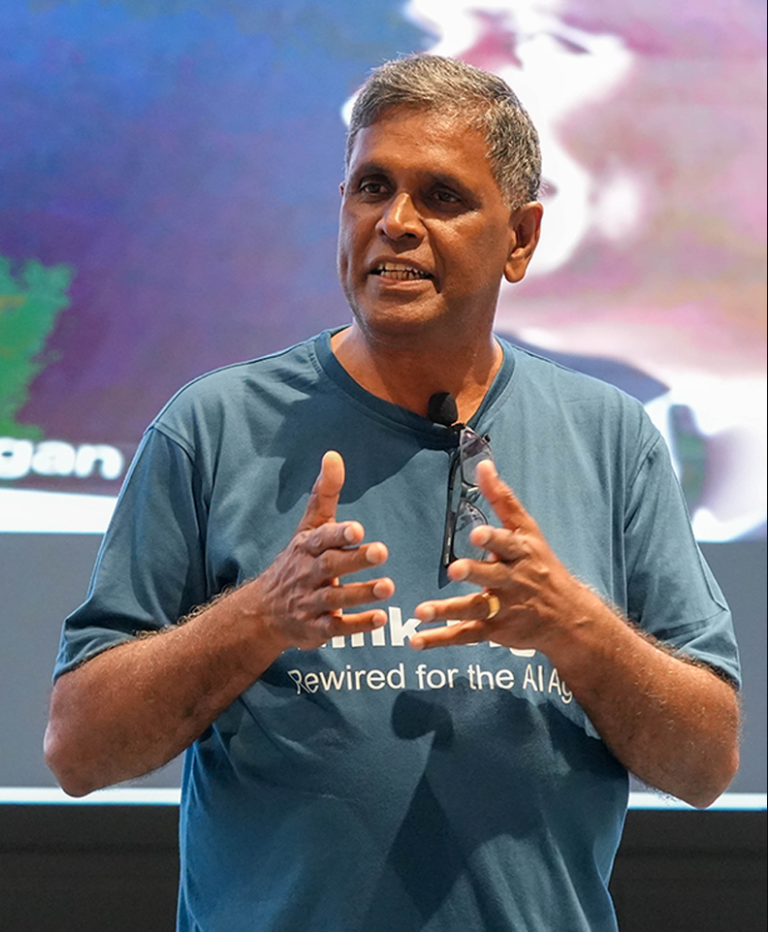
With over 40 years of international experience across computing, telecommunications, digital strategy, and AI enablement, Logan Nathan mentors students and advises institutions worldwide on thriving in the intelligence era.