Future Builder Stories7 min readSeptember 15, 2026
Don’t Chase the Bee: Build Something Worth Finding – A Guide to Personal and Professional Growth
“. Preparation and personal growth can help you recognise and make the most of opportunities when they arise. AI should enhance learning, not replace human effort and critical...”
Focus on building valuable skills and character instead of chasing superficial success.
Preparation and personal growth can help you recognise and make the most of opportunities when they arise.
AI should enhance learning, not replace human effort and critical thinking.
Relationships should be mutually beneficial, like the natural interaction between bees and flowers.
Key Answer
Instead of focusing only on chasing opportunities, invest in building valuable skills, character and relationships. Just as a flower grows before the bee arrives, preparation helps you recognise and make the most of opportunities when they appear.
I was in my garden, watching bees drift leisurely from flower to flower.
The flowers stood still, rooted in place, yet brimming with life. They weren’t chasing the bees. Instead, they simply grew, opened and offered nectar.
That simple scene became a metaphor for a broader lesson in life: instead of constantly chasing opportunities, focus on building something worth finding.
I think of it simply as:
“Don’t Chase the Bee.”
Why Chasing Opportunities Isn't Sustainable
In our fast-paced world, it is tempting to chase success, recognition or the latest technological trends.
However, constantly chasing the next achievement can leave us focused on external recognition rather than developing the skills and qualities that support long-term growth.
Imagine a student who spends all their time focusing on getting perfect grades but neglects communication skills or creative thinking.
When they graduate, they may discover that qualifications alone do not guarantee success in a constantly evolving job market.
The pursuit of grades has given them an outcome, but it may not have prepared them for the opportunities and challenges they encounter beyond the classroom.
The Art of Building Yourself First
Rather than focusing only on what is outside you, the journey should also begin within.
Build your knowledge. Build your skills. Build your confidence. Build your character.
These are the foundations that prepare you to recognise and make the most of opportunities. Take, for example, a young adult entering the workforce. By focusing on personal growth, such as developing digital literacy and strengthening critical thinking, they become more adaptable.
This adaptability becomes particularly valuable as AI changes how people learn and work.
Building yourself first also reflects the philosophy behind my book, FUTURE READY™ – Small Steps. Big Dreams.
It explores how young people can prepare for opportunities and challenges they cannot yet predict by building the right mindset, human skills and positive habits.
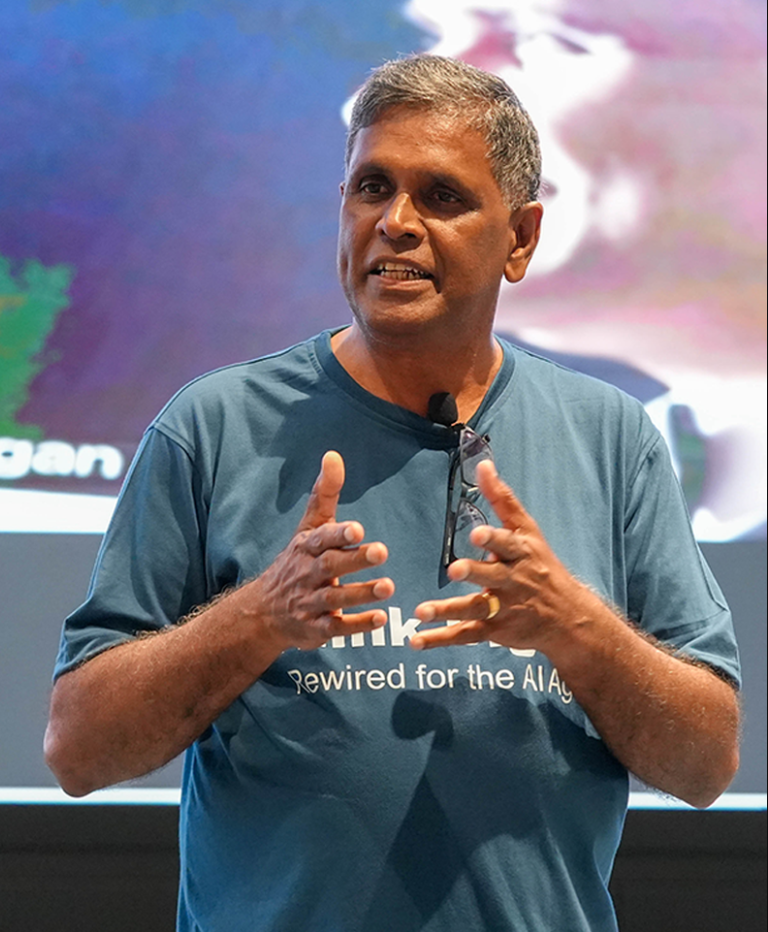
Logan’s Perspective
Over more than four decades working across technology and business, I’ve come to realise that genuine success is rarely something we simply chase down.
It is cultivated through learning, preparation and consistent effort.
By focusing on self-development and adaptive skills, we become better prepared not only for opportunities available today, but also for those that emerge unexpectedly in the future.
Progress Through Small, Repeated Actions
A flower doesn’t bloom overnight.
It grows one day at a time.
The same principle applies to personal and professional development.
Consider a teacher helping students develop critical thinking.
By encouraging them to engage regularly with challenging problems, question information and explain their reasoning, the students gradually become more confident independent thinkers.
That preparation matters.
Long-term capability is rarely created by one exam, one project or one moment of success.
It develops through skills practised over time.
As I see it:
“A flower grows one day at a time. Then one day, the bees arrive. Small steps create the value that attracts bigger opportunities.”
That is the essence of steady growth.
The Role of AI: Enhancing but Not Replacing Human Capability
AI offers powerful tools that can support learning and personal development.
It can explain difficult concepts, provide feedback, help explore different ideas and offer another way of approaching a problem.
But it should not replace the human effort, curiosity and judgement that learning is supposed to develop.
For instance, AI can assist students by offering feedback, explanations and different ways to explore a topic.
However, students still need to question AI outputs, verify important information and apply their own judgement.
Used this way, AI can support learning without replacing the thinking and effort students need to develop themselves.
The goal is not simply to use AI because it is available.
It is to use AI in ways that make us more capable.
Mutually Beneficial Relationships: Learning from Nature
The relationship between bees and flowers offers another useful lesson. The bee receives nectar. The flower is pollinated. Both benefit from the interaction. It is a simple example of mutual value, and the same principle can be useful when thinking about relationships in life and work.
Consider a business owner who focuses not only on sales but also on building meaningful relationships with customers.
By providing genuine value, listening to customers and solving real problems, the business can build trust and loyalty over time.
Young people can apply the same principle to their own relationships. Rather than approaching every interaction by asking: “What can I get from this person?” it can be useful to ask: “What can I contribute?”
Strong relationships are rarely built through one-sided transactions. They grow when people listen, help, collaborate and create value for one another.
Build the Flower Before Chasing the Bee
The idea of “Don’t Chase the Bee” does not mean that opportunities require no effort.
It does not mean sitting back and waiting for something to happen.
We still need to act. We need to apply for opportunities. Meet people. Try new things. Develop skills. Share our work. Ask questions. Take calculated risks.
The difference is that we should not spend so much energy chasing the appearance of success that we forget to build the capabilities needed to sustain it.
Sometimes the most important progress is happening long before anyone else can see it.
A skill being practised.
A habit being formed.
A relationship being strengthened.
A mistake being reflected on.
A difficult problem being worked through.
These things may not bring an immediate reward. But they help prepare us for opportunities when they do appear.
Small Steps Create Bigger Possibilities
One of the central ideas behind FUTURE READY™ — Small Steps. Big Dreams. is that young people do not need to have their entire future worked out.
They can dream big while starting small. Read something new. Practise a skill. Ask another question. Begin a project. Help someone. Seek feedback. Try something you have never done before. Then do it again. Small actions accumulate. Skills develop. Confidence grows. And over time, we become better prepared for possibilities we may not have been able to predict.
You cannot control when every opportunity will arrive. But you can control whether you are growing and preparing yourself along the way.
Build the flower. Be ready when the bee appears.
Continue the Future Ready Journey
Big opportunities are often supported by the capabilities, habits and relationships we build long before those opportunities appear.
Explore FUTURE READY™ — Small Steps. Big Dreams., to discover how small steps today can help young people prepare for the possibilities of tomorrow.
Frequently Asked Questions
Why is it important to focus on personal growth rather than chasing success?
Personal growth helps develop the skills, character and judgement needed to make the most of opportunities when they arise. Achievements can be valuable, but they are more useful when supported by genuine capability.
Does “Don't Chase the Bee” mean I should stop pursuing opportunities?
No. You should still apply for opportunities, meet people, experiment and put yourself forward. The idea is to avoid focusing so heavily on chasing outcomes that you neglect developing the capabilities needed to make those opportunities worthwhile.
How can AI be used responsibly in education?
AI can support learning by providing explanations, feedback and different perspectives. Students should still question its output, verify important information and apply their own critical thinking and judgement.
What does the relationship between bees and flowers teach us about interactions?
It illustrates the value of mutually beneficial relationships. Strong relationships are built when both sides contribute something meaningful rather than one side continually taking.
How does FUTURE READY™ relate to this concept?
FUTURE READY™ — Small Steps. Big Dreams. explores how young people can build the mindset, skills and habits needed to prepare for opportunities and challenges they cannot yet predict.
What are examples of small, repeated actions that lead to growth?
Daily habits such as reading, practising a skill, asking questions, seeking feedback or reflecting on goals can contribute to meaningful personal and professional growth over time.
With over 40 years of international experience across computing, telecommunications, digital strategy, and AI enablement, Logan Nathan mentors students and advises institutions worldwide on thriving in the intelligence era.