AI Should Strengthen a Young Person’s Thinking—Not Replace It
“. A structured approach to using AI can enhance learning outcomes. Stakeholders must ensure AI serves as a guide rather than a substitute. Encouraging curiosity and critical...”
AI should complement, not replace, independent thinking in education.
A structured approach to using AI can enhance learning outcomes.
Stakeholders must ensure AI serves as a guide rather than a substitute.
Encouraging curiosity and critical thinking is essential for effective AI use.
Key Answer
AI should serve as a tool to enhance young minds by encouraging independent thinking and problem-solving skills, not replace them. Using a structured approach such as Think → Ask AI → Compare → Verify → Explain helps students actively engage with AI as a supportive guide.
AI Should Strengthen a Young Person’s Thinking – Not Replace It. It’s a statement that encapsulates a crucial balance we need to strike in education today. Imagine a bright student in Sri Lanka, an assignment just submitted, glistening with the polish of efficiency thanks to AI. Yet, when probed to explain the argument, they falter. The work is done, yet the comprehension is superficial.
This scenario reveals a pivotal challenge in our education system: ensuring AI supports learning, rather than doing it all.
After more than four decades working with technology, I have seen tools change dramatically. While AI offers remarkable potential, the principle is simple: AI should be a guide, not a crutch. AI can articulate complex ideas, provide illustrative examples, and stimulate inquisitive questions. But the danger arises when it overshadows the very essence of learning – thinking critically and independently.
A Simple Framework for Using AI Effectively
To harness AI’s potential while ensuring it strengthens rather than replaces a young person’s thinking, consider adopting this structured approach:
Think: Begin with what you already know. Encourage students to jot down their initial thoughts and hypotheses before turning to AI. This step ensures that the learner is actively engaging with the topic from the outset.
Ask AI: Use AI for explanations, examples, and questions. This interaction should extend the student’s understanding, not provide all the answers. A guiding principle is to use AI to expand perspectives, not define them.
Compare: Compare the AI response with your own thinking or other information. Look at what is similar, what is different, and whether the AI has introduced perspectives you had not considered.
Verify: Always verify important information provided by AI. AI can err, and checking facts against textbooks or credible online sources is essential. This step reinforces the practice of critical thinking and fact-checking.
Explain: Articulate the concept in your own words. If you can teach it, you understand it. This step transforms knowledge from passive to active, embedding understanding.
Logan’s Perspective
In my experience, the most profound educational transformations occur when technology acts as an extension of our intellect rather than its substitute. AI, when used wisely, can be a powerful ally in developing critical thinkers and lifelong learners.
Roles of Students, Parents, and Teachers
The effective integration of AI into education requires cooperation among students, parents, and teachers. Students need to ensure they comprehend what they submit. It’s not enough to turn in a polished paper; understanding and articulating the content is key.
Parents play a pivotal role by shifting the focus from completion to learning. Asking, “What did you learn?” instead of “Is your assignment finished?” changes the dialogue to one that values understanding over mere task completion.
For teachers, the challenge is to reward reasoning, discussion, reflection, and the application of original thought. By doing so, educators can encourage students to delve deeper, fostering a classroom environment that values critical engagement over rote memorisation.
Each of these roles contributes to a holistic learning experience, one where AI is a facilitator of learning rather than its replacement.
Technology as a Catalyst for Curiosity
From my perspective, as outlined in my book, FUTURE READY™, technology should be a catalyst that encourages curiosity, judgement, and purposeful inquiry. AI presents an incredible opportunity to open doors, but we must walk through those doors armed with our own inquisitiveness.
Properly integrating AI into education in places like Sri Lanka means nurturing curiosity and reinforcing it with sound judgement and purpose. It is not just about having access to technology but knowing how to utilise it effectively as a co-pilot in the learning journey.
To truly measure if AI is strengthening your thinking, try this challenge: ask AI to explain a topic you’re unfamiliar with. Then, close the screen and explain it to someone else. If you succeed, you’ve learned; if not, you’ve merely received information. This exercise underscores the importance of active engagement with AI outputs and the necessity of understanding rather than just accepting what AI offers.
As a society, our goal should be to raise a generation of thinkers who use AI as a tool to augment their learning, not as a surrogate to replace their intellectual efforts. Preparing young minds for future success involves nurturing their ability to think critically and creatively with the aid of technology, not in place of it.
Embracing the Future, Thoughtfully
In conclusion, using AI should not be about bypassing the mental challenges that shape us but enhancing the journey of learning. As education evolves, students, parents, and educators need to adapt, ensuring AI is a partner in learning, not the thinker itself.
This philosophy is not just aspirational but necessary. As we stand on the cusp of an AI-driven future, we must prepare future innovators to harness this technology wisely. Let’s foster a generation that is not just capable of using AI, but one that thrives because it knows how to think with it.
Taking the Next Step
As we stand on the cusp of an AI-driven future, we must prepare future innovators to harness this technology wisely. To ensure AI strengthens and doesn’t replace young minds, educators and parents in Sri Lanka and beyond must promote balanced usage. Encourage critical thinking, active learning, and continuous questioning. Let’s build a future where technology complements the learning process, enriching the educational landscape without overshadowing the brilliance of young minds.
Frequently Asked Questions
How can AI support independent thinking in students?
AI can support independent thinking by acting as a guide, offering explanations, posing questions, and encouraging exploration, rather than providing direct answers.
What role do parents play in AI-supported education?
Parents should focus on what their child learned using AI, fostering discussions that emphasise understanding and critical engagement over mere task completion.
Why is it important for students to verify AI-generated information?
Verifying AI-generated information teaches students critical thinking and ensures they engage actively with the material, leading to deeper understanding.
How can teachers incorporate AI in a balanced way?
Teachers can incorporate AI by rewarding reasoning and original thought, encouraging students to use AI as a tool for extending their understanding.
What is the five-step approach to using AI in learning?
The framework is Think → Ask AI → Compare → Verify → Explain. Students begin with their own thinking, use AI to explore the topic, compare its response with their own understanding or other information, verify important claims, and explain what they have learned in their own words.
Sources & Further Reading
How AI is reshaping human skills and thinking
The Impact of AI on Children’s Development
How Will Artificial Intelligence (AI) Affect Children?
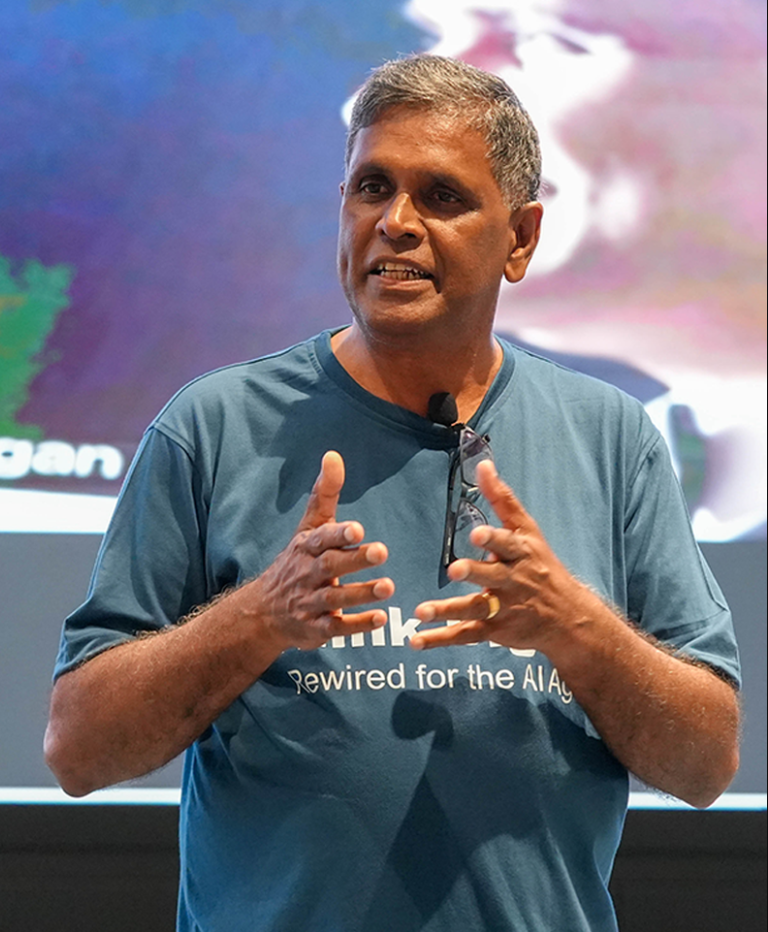
With over 40 years of international experience across computing, telecommunications, digital strategy, and AI enablement, Logan Nathan mentors students and advises institutions worldwide on thriving in the intelligence era.